
How to Write Effective Content for Conversational Search
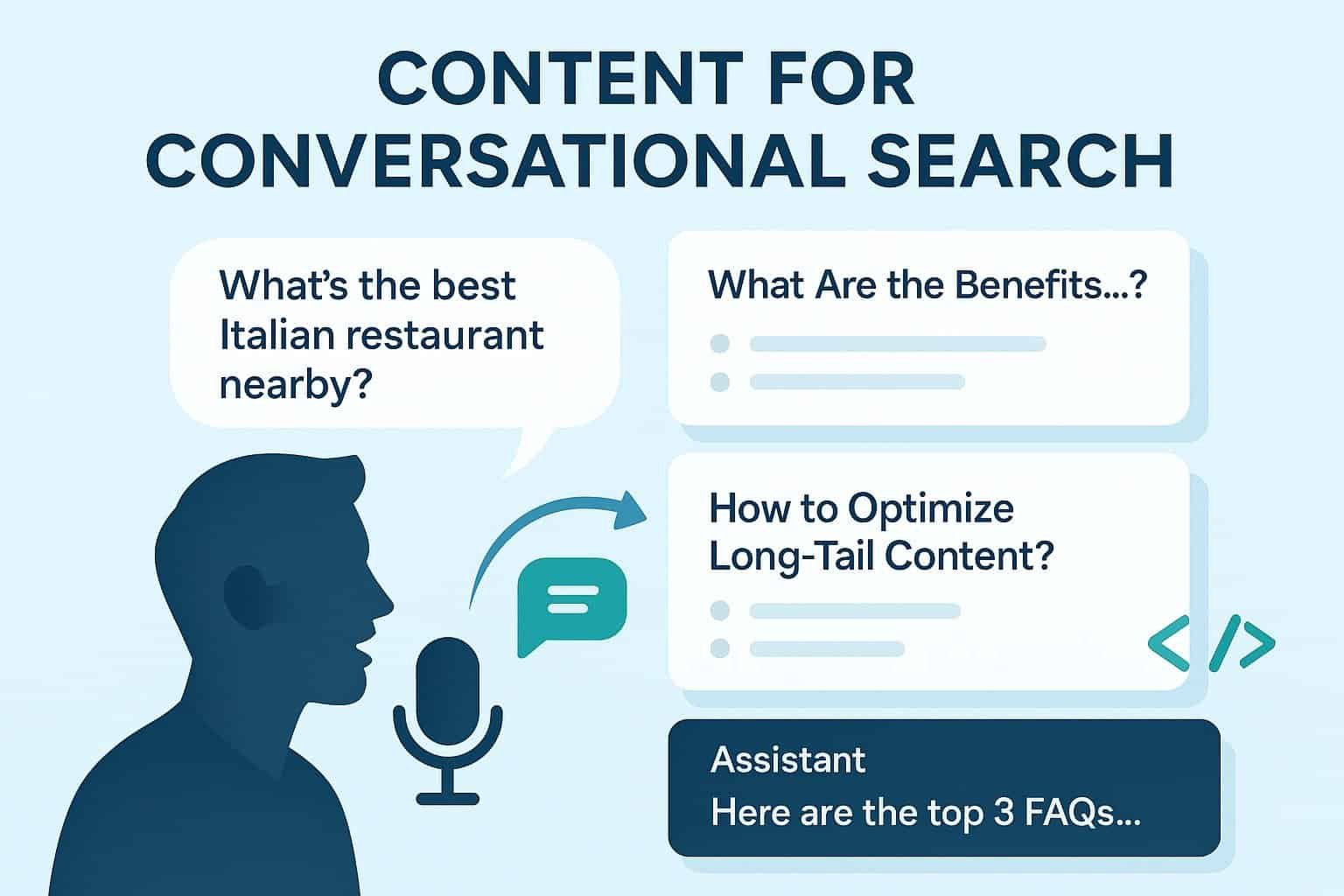
The Conversational Search Revolution: Redefining How We Find Everything
Imagine asking a website for help choosing a laptop just as you would a knowledgeable friend: “I need something for photo editing and some gaming.” Instead of a static list of specs, you receive clarifying questions about portability, screen size, and professional needs. This dynamic, intuitive dialogue is the promise of conversational search, a technological shift transforming everything from online shopping to enterprise knowledge management.
Driven by the widespread adoption of AI assistants like Siri and Alexa, conversational search is no longer a novelty. Approximately 20% of mobile searches now use voice or conversational inputs, with 76% of smart speaker users employing them for local business queries weekly. This represents a fundamental change in user behavior, moving from keyword-based commands to natural language questions. As a result, businesses and content creators must rethink their digital strategies to remain visible and relevant in this new, dialogue-driven landscape.
Beyond the Keyword: How Conversational Search Actually Works
At its core, conversational search uses Natural Language Processing (NLP) and Artificial Intelligence (AI) to understand user intent, not just match keywords. This allows systems to process complex sentences, consider context from previous interactions, and engage in multi-turn conversations where follow-up questions are understood naturally.
A key distinction is that conversational search is more than just voice search. Voice search is simply using speech as an input method, while conversational search prioritizes a dynamic, human-like interaction that can occur via text or voice. The defining feature is contextual understanding. For example, if a user asks, “What are the best laptops under $1000?” and then follows up with, “Which one has the best battery life?” a conversational system remembers the context and refines the answer accordingly.
Why It Matters: From User Experience to Business Impact
The shift to conversational search addresses major pain points in the digital experience and offers significant advantages.
For Users, It’s About Frictionless Discovery
Accessibility: It reduces the “cognitive switching penalty” of adapting to “computer-speak,” making technology more accessible, especially for people with vision impairments or who struggle with traditional inputs.
Speed and Relevance: By quickly grasping intent, it delivers more accurate information faster, eliminating the frustration of irrelevant search results.
Reduced Cognitive Load: Conversational interfaces guide users with focused, step-by-step interactions, which is invaluable for those with cognitive disabilities or anyone overwhelmed by complex websites and information overload.
For Businesses, It’s a Strategic Advantage
Leading brands are already seeing dramatic results by integrating conversational search into their customer journeys. The benefits span multiple sectors:
| Sector | Conversational Search Application | Documented Outcome |
|---|---|---|
| E-commerce | Guided product discovery (e.g., Microsoft’s Surface advisor, Canon’s camera selector) | Microsoft increased retail sales by 270% and engagement by 90%. |
| Professional Services (Law, Consulting) | Instant surfacing of expertise, case studies, and insights from vast content libraries | Faster client response times, improved lead conversion, and a stronger perception of expertise. |
| Customer Support | AI-powered self-service that resolves common queries and escalates complex issues | Reduction in support burden, higher First Contact Resolution (FCR) rates, and more efficient resource allocation. |
Beyond direct conversions, conversational search provides rich, actionable insights. By analyzing the questions users ask, businesses can understand unmet needs, identify content gaps, and spot broken processes, turning the search function into a real-time analytics engine.
Navigating the Challenges and Looking Ahead
Implementing conversational search is not without its hurdles. Systems must be designed to handle diverse speech patterns, accents, and phrasing. There are also risks to mitigate, such as AI “hallucinations” (generating incorrect information), data privacy concerns, and ensuring the AI can access information across disparate enterprise systems (like CRMs and knowledge bases) to avoid incomplete answers.
The future of conversational search lies in its evolution into a true personal assistant. The vision extends beyond answering questions to taking proactive action—imagine an AI that not only finds a parking spot near your meeting but reserves it and checks for an EV charging station based on your calendar and car’s battery level. As technology advances, we can expect more sophisticated personalization, seamless integration across all devices, and a continued blurring of the lines between searching the web and having a helpful conversation.
For any organization, the message is clear: ignoring this shift is a strategic mistake. The tools exist, user preference is firmly established, and the competitive gap is widening. The future of search isn’t about typing—it’s about talking. The question is no longer if conversational search will redefine our digital interactions, but how quickly you will adapt to be a part of that conversation.